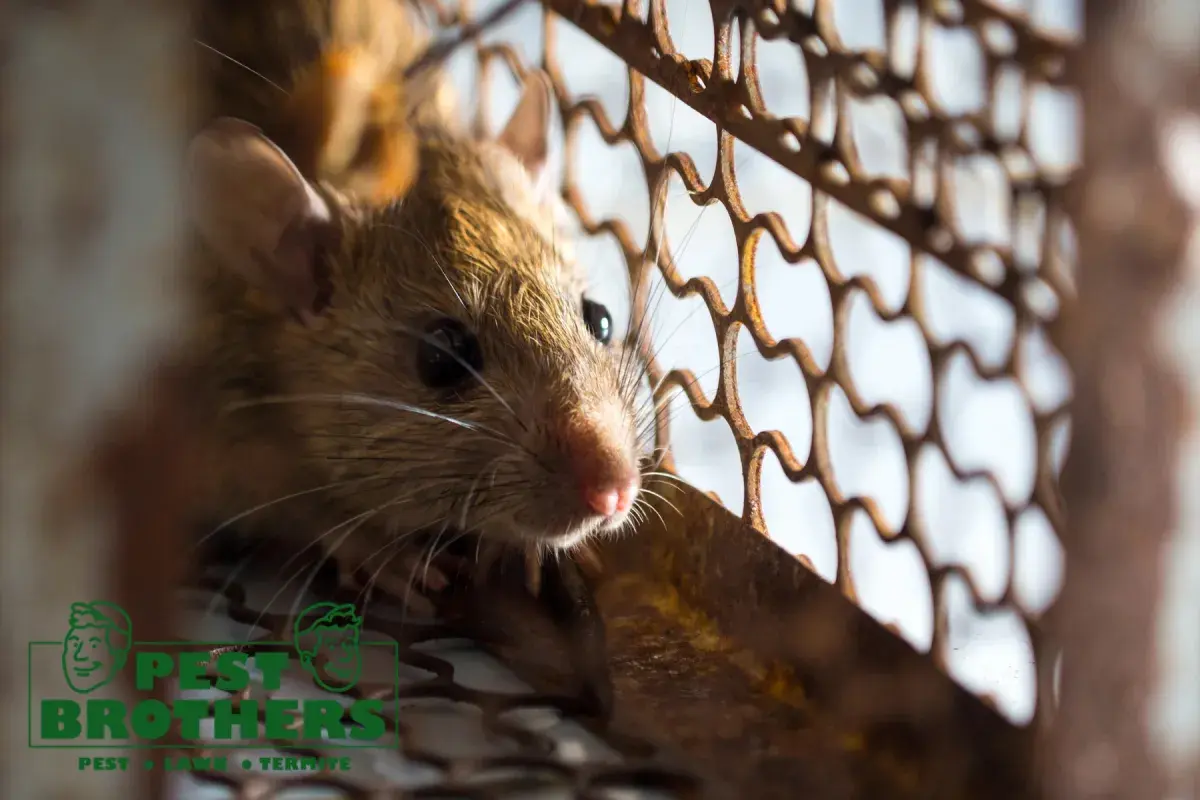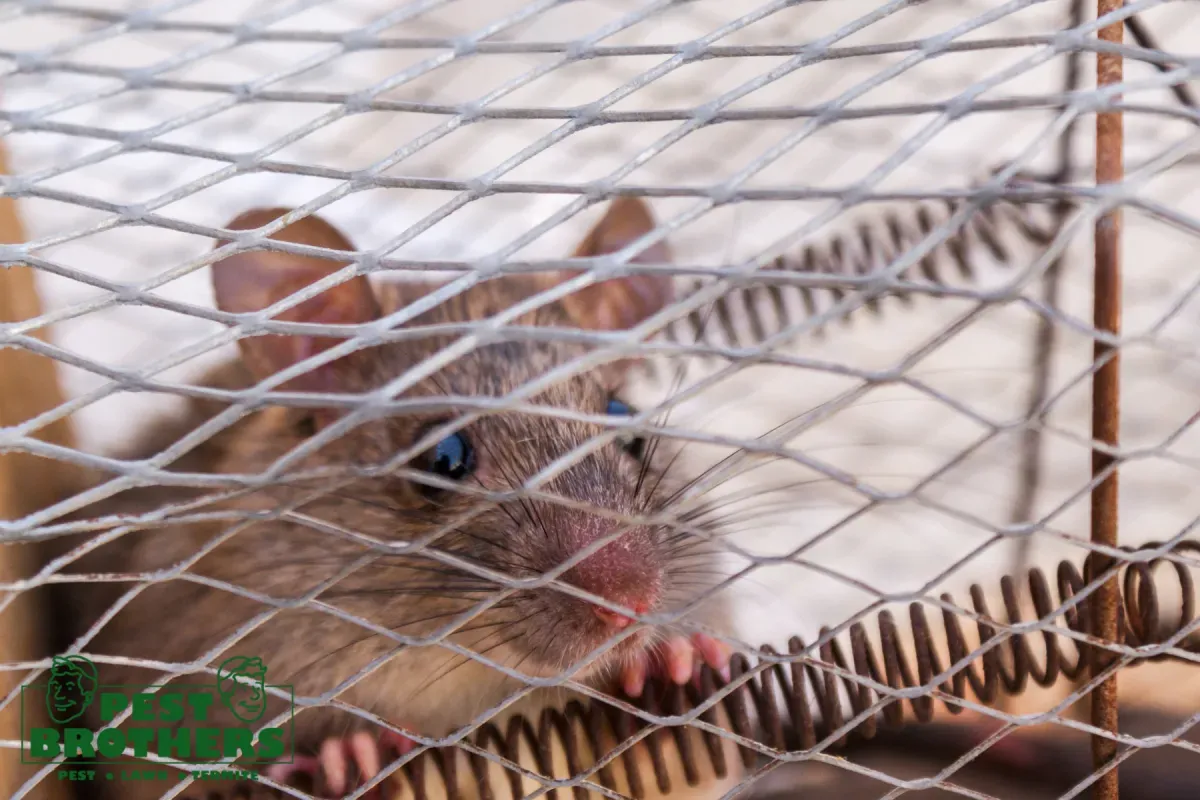
Professional rat trapping starts with a property inspection to find signs of rat activity, travel routes, entry points, and conditions that may support an infestation. A technician then uses professional trapping methods based on those findings and may recommend exclusion work to seal access points and help prevent rats from returning.
What Happens During Professional Rat Trapping?
Professional rat trapping is more than placing a trap where a rat was seen. The first step is understanding how rats are using the property and what may be allowing them to enter or remain there.
Pest Brothers begins rodent service with a detailed inspection of both indoor and outdoor areas. Technicians look for signs such as droppings, chewed materials, gnaw marks, grease trails, nesting areas, and potential entry points.
1. The Technician Discusses the Rat Problem
The service usually begins with a conversation about what you have noticed.
The technician may ask:
- Where have you seen rats?
- How often have you seen them?
- Have you noticed droppings or gnaw marks?
- Have you heard scratching or movement?
- Are signs appearing indoors, outdoors, or both?
- Have you tried traps or other DIY methods?
- Have you had professional rodent service before?
These details help the technician understand what has been happening before inspecting the property.
2. The Property Is Inspected
The technician then looks for evidence of rat activity and conditions that may support it.
Depending on the property, the inspection may include:
- Kitchens and food storage areas
- Garages and storage spaces
- Attics and crawl spaces
- Exterior walls and foundations
- Landscaping
- Areas around waste or garbage
- Doors and windows
- Openings around pipes, vents, or other structures
The technician may look for droppings, chewed materials, gnaw marks, grease trails, nesting areas, and other evidence of activity. Pest Brothers also assesses conditions such as food sources, clutter, and structural gaps that may attract or provide access to rats.
3. Rat Travel Routes and Entry Points Are Identified
Finding how rats are getting around the property can help determine where trapping and exclusion work should be focused.
Signs near walls, openings, storage areas, or other protected spaces can provide useful clues. The technician uses the inspection findings to build a plan around the property’s actual conditions rather than assuming every rat problem is the same.
For homeowners dealing with rodent activity in Hialeah, identifying the source of the problem can be especially important when rats continue appearing after basic trapping attempts.
How Are Professional Rat Traps Placed?
Professional trapping should be based on the conditions found during the inspection. The technician considers where rat activity is occurring, how rats are moving through the property, and where traps can be placed appropriately.
What Factors Affect Trap Placement?
A technician may consider:
- Rat activity: Fresh signs can help identify areas that need attention.
- Travel routes: Rats may repeatedly use certain paths around a property.
- Entry points: Activity near an opening may indicate how rats are accessing the structure.
- Food sources: Accessible food can affect where rats spend time.
- Property layout: Garages, attics, crawl spaces, and outdoor structures can have different conditions.
- Safety: Trap locations should take normal household or business activity into account.
There is no single trap placement that works for every property. The location and type of service should reflect what the inspection reveals.
What Happens After the Traps Are Set?
Trapping is not necessarily finished once the equipment is placed. Monitoring helps determine whether rat activity is decreasing and whether additional action is needed.
1. Traps Are Monitored
The technician checks for signs that rats have interacted with the traps and looks for continued activity.
2. Activity Is Reassessed
New droppings, gnaw marks, sightings, or other signs can provide information about whether rats are still active.
3. The Approach Can Be Adjusted
If activity continues, the technician can reassess the property and determine whether changes to the trapping or exclusion plan are appropriate.
4. Entry Points Are Addressed
If rats can continue entering the property, trapping alone may not solve the reason they keep appearing.
5. Exclusion May Be Recommended
Exclusion focuses on sealing suitable openings that allow rats to enter the structure.
6. Follow-Up May Be Needed
Some infestations require additional service or monitoring. The appropriate schedule depends on the conditions found at the property.
Rat Trapping vs. Rat Exclusion: What’s the Difference?
Trapping and exclusion address different parts of a rat problem.
| Rat Trapping | Rat Exclusion |
| Focuses on existing rat activity | Focuses on reducing access |
| Uses professional trapping methods | Seals suitable entry points |
| Requires monitoring | Requires identifying vulnerable openings |
| Addresses rats already using the property | Helps prevent additional rats from entering |
| May require follow-up | Can support long-term prevention |
Pest Brothers combines professional trapping with exclusion when appropriate. The company’s service page explains that severe infestations may require professional-grade trapping while exclusion work focuses on sealing entry points to prevent further access.
This distinction matters because trapping a rat does not automatically close the opening that allowed it inside.
What Signs Suggest You May Have a Rat Problem?
You may not always see a rat directly. Other signs can point to activity around a property.
Droppings
Rat droppings may appear near areas where rodents are feeding or traveling.
Gnaw Marks
Chewed materials or fresh gnaw marks can indicate rodent activity.
Grease Trails
Rats can leave marks along surfaces they regularly use as travel routes.
Nesting Areas
Shredded or disturbed materials may indicate a place where rats are hiding or nesting.
Scratching or Movement Sounds
Sounds inside walls, ceilings, attics, or other hidden areas may indicate animal activity.
Repeated Sightings
Seeing rats more than once is a reason to investigate the property, especially when other signs are present.
These signs can help identify a possible problem, but they do not tell you the full extent of the activity. A professional inspection can provide more information.
What Should You Do Before Rat Trapping Service?
A little preparation can make the inspection more useful.
1. Note Where You Have Seen Rats
Write down the rooms, outdoor areas, or structures where you have noticed activity.
2. Record Other Signs
Make a note of droppings, gnaw marks, grease trails, nesting material, or unusual sounds.
3. Tell the Technician About Previous Attempts
If you have already used traps or other methods, explain what you tried and where you placed them.
4. Keep People and Pets Away From Suspected Activity Areas
Tell the technician about children and pets so these factors can be considered when discussing service and trap placement.
5. Ask About Preparation
Preparation can vary by property and service. Ask the company whether anything needs to be moved or made accessible before the inspection.
Professional Rat Trapping vs. DIY Trapping
DIY traps can appear simple, but placing a trap is only one part of managing rat activity.
| Professional Service | DIY Trapping |
| Begins with a property inspection | Often begins with placing a trap |
| Looks for activity and entry points | May focus on where a rat was seen |
| Trap placement is based on inspection findings | Placement may involve trial and error |
| Includes professional monitoring | Homeowner handles monitoring |
| Can identify conditions supporting activity | Underlying conditions may be overlooked |
| Can include exclusion work | Homeowner must address entry points |
DIY trapping may be suitable for some limited situations, but recurring activity can be harder to resolve when the source is unclear or rats are entering through inaccessible areas.
How Does Rat Exclusion Help After Trapping?
Trapping addresses rats that interact with the traps. Exclusion focuses on reducing the ways rats can enter the property.
Potential access points can include:
- Gaps around pipes and utility lines
- Openings around doors and windows
- Cracks and gaps near foundations
- Openings around vents
- Gaps in exterior structures
- Other openings identified during an inspection
The material used for exclusion should match the opening being addressed. Sealing an entry point is more useful when the technician first understands how rats are accessing the property.
Applying Our Family-Owned, Humane, Safe, and Targeted Approach to Solve This
At Pest Brothers, Inc. – Pest, Lawn, & Termite Control, our rat trapping and exclusion service is built around a few clear principles: family-owned service, humane methods, safe and eco-friendly practices, customized solutions, targeted work, and practical exclusion materials such as steel mesh and caulking.
These are not simply marketing terms. Each one describes how we approach a rat problem and communicate with the customer.
Family-Owned Company
Pest Brothers is a family-owned company that emphasizes personal customer care.
For rat problems, that means taking time to understand the customer’s concern and explain what the technician finds. Customers should know what is being addressed and why a particular step is being recommended.
Humane Methods
Pest Brothers states that it uses humane methods when addressing rat infestations.
This means the service is approached with care rather than treating trapping as a simple matter of placing equipment and leaving. The method used should fit the situation and the property.
Safe and Eco-Friendly Methods
Pest Brothers emphasizes environmentally friendly and safe pest control practices.
For rat service, this means considering the property and the people and pets who use it when planning the work. The goal is to address the rodent concern without creating unnecessary disruption.
No One-Size-Fits-All Solutions
Pest Brothers specifically describes its rat service as customized rather than based on one-size-fits-all solutions.
A rat problem in an attic may have different conditions from one in a garage or around a commercial property. The inspection helps determine what is actually happening so the service can be tailored to the property.
Our Targeted Approach
The targeted approach starts with finding the areas connected to rat activity. Pest Brothers describes its process as inspecting the property, identifying signs and entry points, and then developing a customized plan of action.
Instead of treating every area in the same way, the goal is to focus on the locations and conditions that matter to the specific problem.
Steel Mesh
Steel mesh is one of the materials Pest Brothers identifies for sealing potential rat entry points.
It can be used where appropriate to create a physical barrier at suitable openings. The important part is identifying the access point first so the material is used where it can address the actual problem.
Caulking
Caulking is another material identified by Pest Brothers as part of its exclusion work.
It can be used to seal suitable small gaps and openings. As with steel mesh, the material should be selected based on the opening and conditions found during the inspection.
Together, these elements make the service more than a simple trapping visit. The process starts with understanding the property, uses targeted trapping where appropriate, and addresses access points that may allow rats to return.
Common Myth: Trapping One Rat Solves the Entire Problem
Myth: Once you catch one rat, the infestation is over.
Reality: Catching one rat does not confirm that all activity has stopped or that other rats cannot enter the property.
If an entry point remains open, another rat may gain access later. Food, waste, clutter, and other conditions may also continue to support rodent activity.
That is why Pest Brothers’ service combines trapping with exclusion when appropriate. The company’s process focuses on both reducing existing rat activity and sealing access points that can allow further entry.
How Do You Know if Rat Trapping Is Working?
Several signs can help show whether activity is decreasing.
Fewer Rat Sightings
A reduction in sightings can be a useful sign, particularly when other signs are also decreasing.
Fewer Fresh Droppings
If new droppings stop appearing in previously active areas, this can provide another indication that activity has changed.
Less New Damage
A reduction in fresh gnaw marks or other damage can also provide useful information.
Fewer Signs During Follow-Up
Continued monitoring is important because one quiet day does not necessarily mean the problem has ended.
If signs continue, the property may need to be reassessed to determine whether additional trapping or exclusion work is appropriate.
When Should You Call a Professional for Rat Trapping?
Consider professional help when:
- You repeatedly see rats around the property.
- You find fresh droppings or gnaw marks.
- You hear scratching inside walls or ceilings.
- DIY traps have not resolved the activity.
- You cannot identify where rats are entering.
- Rats are appearing in difficult-to-access areas.
- You are concerned about children or pets encountering traps.
- You want help finding and sealing entry points.
- Rat activity continues after previous trapping attempts.
If you are dealing with recurring activity, researching Hialeah pest control can help you understand whether trapping alone is appropriate or whether exclusion should also be part of the plan.

People Also Ask
How does professional rat trapping work?
Professional rat trapping generally begins with a property inspection to identify signs of activity, travel routes, and entry points. The technician then uses professional trapping methods based on the findings and may recommend exclusion to reduce future access.
Where do professionals place rat traps?
Trap placement depends on the conditions found during the inspection. Technicians consider areas with signs of rat activity, travel routes, suspected entry points, and locations that can be safely monitored.
Does rat trapping get rid of all rats?
Trapping can address rats that interact with the traps, but it does not automatically prevent new rats from entering. Entry points and other conditions that support activity may also need attention.
How long does professional rat trapping take?
The timeline varies based on the property, level of activity, number of affected areas, and whether follow-up or exclusion work is needed.
What should I do if I catch a rat?
Follow the instructions provided by your pest control professional for handling and cleanup. One trapped rat should not automatically be treated as proof that all activity has stopped.
Is professional rat trapping safe for pets and children?
Safety should be considered when determining where and how traps are placed. Tell the technician about children and pets so these factors can be considered during service planning.
What Happens After Professional Rat Trapping?
The service does not necessarily end when a rat is trapped. Continued monitoring can help determine whether fresh signs of activity are still appearing.
Homeowners should continue watching for droppings, gnaw marks, unusual sounds, or new sightings. If activity continues, the pest control company can reassess the situation and determine whether additional service is needed.
For homeowners researching pest control in Hialeah, FL, understanding the difference between trapping and exclusion can also help set realistic expectations about professional service.
A complete rat management plan may involve identifying the activity, trapping rats, finding entry points, sealing suitable openings, and reducing conditions that encourage rats to remain on the property.
Understanding the Rat Trapping Process
Professional rat trapping is not simply about placing a trap and waiting. It begins with inspecting the property, identifying signs of activity and entry points, and developing a plan around the conditions found.
For recurring rodent problems, trapping and exclusion may need to work together. Materials such as steel mesh and caulking can be used for suitable openings, while professional trapping addresses existing activity.
If you are considering pest control in Hialeah because rats keep appearing around your property, a professional inspection can help identify where the activity is coming from and what steps may be appropriate.
At Pest Brothers, Inc. – Pest, Lawn, & Termite Control, we focus on family-owned service, humane methods, safe and eco-friendly practices, and solutions tailored to the property.
If you are dealing with rat activity and want to understand your options, contact us today for a consultation or quote.