
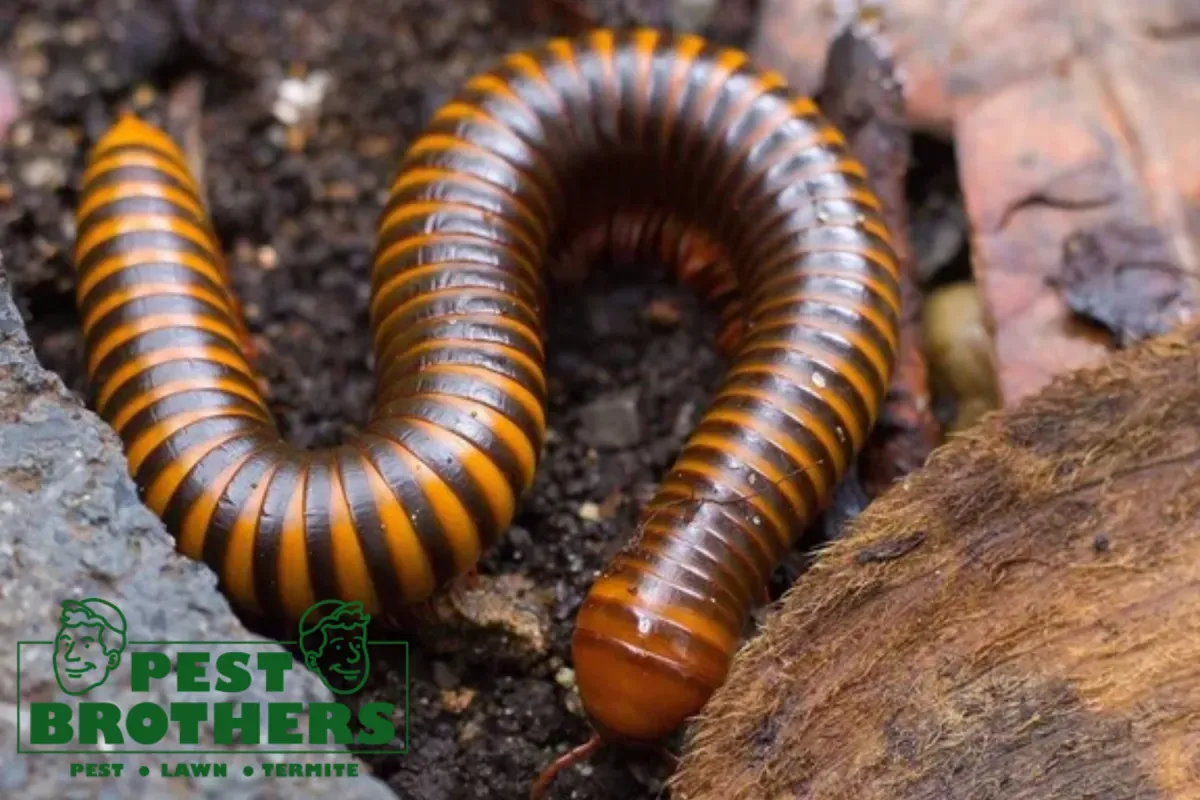
Moisture control reduces millipede activity by eliminating the damp habitats and high humidity levels they require for survival. Because millipedes lack a waterproof outer wax layer, they dehydrate rapidly in dry environments. Stripping away excess moisture from soil, mulch lines, and foundations forces them to retreat or perish, preventing structural indoor invasions.
Quick Reference: Damp Breeding Ground vs. Managed Dry Perimeter
Millipede behavior, clustering habits, and migration vectors depend entirely on localized water accumulation. When hundreds of these multi-legged pests start crawling up your porch or sliding through your doorway, it is a direct reaction to the water levels in your soil. As a trusted Doral, FL exterminator, we understand that managing moisture is one of the most effective ways to reduce millipede activity around homes and businesses. This comparison table highlights how regulating exterior and sub-floor moisture levels impacts their survival and protects your property.
| Property Zone | High-Moisture Conditions (Unmanaged) | Low-Moisture Conditions (Controlled) | Primary Action Items |
| Foundation & Siding | Thick mulch traps rainwater and creates an organic, damp bridge to structural cracks. | A dry soil barrier or gravel border separates turf from the exterior walls. | Rake back organic mulch at least 6 to 12 inches away from the foundation. |
| Crawlspaces & Basements | High relative humidity, standing water pools, and condensation trails. | Relative humidity dropped below $50\%$; air stays constantly circulated. | Run commercial-grade dehumidifiers and seal exposed earth floors. |
| Landscape Perimeter | Over-watered turfgrass; heavy leaf litter piles rotting near concrete surfaces. | Pruned ground cover; scheduled morning drip irrigation dries by nightfall. | Adjust automatic lawn sprinklers to water only early in the day. |
Technical Specifications of Millipede Moisture Dependency
Understanding exactly how moisture control helps reduce millipedes‘ activity around a property requires a close look at their biology. Millipedes are detritivores governed entirely by microclimatic water stress. They cannot handle dry air, making environmental control your absolute best weapon. Licensed technicians track these specific physiological traits and environmental metrics to neutralize migrating clusters:
Epicuticular Permeability Index
The anatomical vulnerability of the millipede shell. Lacking a cuticular wax layer like beetles or roaches, their bodies lose water constantly through evaporation when exposed to dry air.
Hydrotactic Aggregation Reflex
The survival instinct that drives millipedes to gather by the thousands in damp, dark spaces (like sub-slab voids) during summer dry spells or heavy autumn rain deluges.
Decomposition Attractant Factor
The chemical draw of wet, decaying organic matter. Saturated leaves and mulch break down rapidly, producing the exact fungal spores and rotting material that millipedes eat.
Sub-Floor Vapor Density
The amount of water vapor hanging in unventilated basements and crawlspaces. High vapor levels allow migrating millipedes to survive indoors indefinitely once they pass structural thresholds.
Debunking the Myth: “Heavy Insecticide Barriers Are the Only Way to Stop a Millipede Migration”
A common and expensive industry misconception among property owners is that applying heavy, continuous exterior barriers around a foundation wall is the only reliable method to stop a massive seasonal millipede migration. It is incredibly easy to look at an outdoor swarm, panic, and expect that soaking the soil in heavy product applications will end the issue permanently.
Without fixing underlying moisture traps, exterior barriers break down rapidly and fail to address the root attraction. When thousands of millipedes crawl out of wet lawns during seasonal weather shifts, relying on quick fixes offers only short-term relief. High soil moisture and hot afternoon sun rapidly break down outdoor applications. More importantly, if your foundation walls remain wet and covered in thick, decaying mulch, new waves of pests will continuously march toward your building envelope.
True long-term prevention requires drying out the exterior perimeter using an Integrated Pest Management approach. This converts the structure’s edge into a dry zone that millipedes naturally avoid. During a recent structural maintenance evaluation for a commercial facility in Doral, our team discovered that broken sprinkler heads were constantly soaking the stucco walls, creating a permanent breeding zone. No amount of exterior product application could overcome that constant stream of water, highlighting why effective Doral pest control must start with proper moisture management.
4. Applying our “Multi-Step Pest Protection Method” to Solve This
When assessing your yard, a property owner might ask: how does moisture control help reduce millipede activity around a property without relying solely on recurring treatments? To prevent millipedes from gathering along your property lines without overapplying harsh products, our team uses a specialized management framework: the Multi-Step Pest Protection Method. This system combines structural moisture adjustments with targeted barrier placement to keep pests out.
Our entire operational approach is rooted in science and strategy. At Pest Brothers, Inc. – Pest, Lawn, & Termite Control, we provide customized pest control in Doral, FL, designed around the specific layout of your yard and foundation. We believe in using eco-friendly, effective methods that protect your property without harming the surrounding environment. Our licensed technicians do not just treat the surface; we identify the underlying structural flaws that allow moisture and pests to accumulate. We will help you identify problem areas, guide you on sealing any gaps or cracks in your walls, and provide clear advice on when to fix any leaky pipes and install a dehumidifier to keep your sub-floors dry. Making sure your home is well-ventilated is a critical step in this process, as moving air prevents the damp, stagnant conditions that millipedes need to survive.
We execute this protocol using a strict three-step chronological sequence to ensure full property protection:
1. Microclimatic Water Source Audit: Phase 1: Hydrological Drainage and Moisture Mapping.
Our licensed technicians thoroughly survey your property grounds. We use specialized moisture meters to locate and map hidden damp pockets within clogged gutters, malfunctioning downspouts, and thick mulch beds.
2. Mechanical Dehumidification Lockdown: Phase 2: Vapor Exclusion and Physical Airflow Balancing.
Before introducing defensive products, we fix structural airflow issues. Licensed technicians install vapor barriers over exposed crawlspace dirt, clear blocked foundation vents, and advise on re-grading landscape beds away from siding.
3. Targeted Border Protection: Phase 3: Environmental Barrier Fortification.
We apply treatment options along the dry foundation edge. Using environmentally friendly, safe pesticides, we lay down a targeted, long-lasting, microencapsulated shield that stops any remaining migrating millipedes in their tracks.
People Also Ask
Why do millipedes suddenly invade homes in large numbers?
Millipedes migrate into structures when their outdoor habitat becomes unlivable, typically due to extreme weather shifts. Heavy rain forces them out of flooded soil to seek higher, drier ground, while summer droughts drive them inward through foundation cracks, looking for dark, cool moisture reservoirs like basements and crawlspaces. Securing an inspection from a trusted exterminator is the easiest way to locate these seasonal entry pathways.
Will millipedes bite, sting, or damage my home’s structure?
No. Millipedes do not possess stingers or biting jaws, and they do not chew structural wood like termites or carpenter ants. They are strictly classified as nuisance pests. However, when threatened or accidentally crushed, certain species can emit a smelly defensive fluid that can stain light-colored indoor flooring, carpets, or grout lines.
How low should I keep my indoor humidity to stop millipede activity?
To completely deter millipedes and keep them from surviving inside your home, keep indoor relative humidity below 50%. Running a commercial dehumidifier in your crawlspace or basement dries out their hiding voids, causing any invading pests to dehydrate and die within hours. If you are facing severe, recurring indoor temperature issues, seeking a professional can help you balance your property’s climate accurately.
Can millipedes multiply and breed successfully inside a house?
No, millipedes rarely breed successfully in living spaces unless there is an active, severe moisture problem, such as a major pipe leak or a flooded basement. They require damp soil or highly saturated decaying organic matter to lay their eggs. If your home is dry and well-ventilated, any millipedes that crawl inside will die from dehydration within a day or two.
What is the difference between a centipede and a millipede?
While both are multi-legged arthropods, they have very different habits. Millipedes have two pairs of legs per body segment, move slowly in a straight line, and feed on decaying leaves and organic plant matter. Centipedes have only one pair of legs per segment, move incredibly fast, and are predatory creatures that hunt other insects using venomous jaws.
Reclaim Your Property Safely and Comfortably
Living with persistent seasonal pest migrations can disrupt your peace of mind and make your living spaces feel unwelcome. At Pest Brothers, Inc. – Pest, Lawn, & Termite Control, we focus on delivering ultimate confidence and comfort by providing reliable, high-quality pest, lawn, and termite control services backed by excellent customer care. As a family-owned business, we maintain a friendly, approachable demeanor, ensuring that you and your family always feel comfortable, secure, and valued.
We want you to feel completely secure and reassured, knowing that your pest concerns are being managed by expert licensed technicians who treat your property with precision and genuine care. Whether you are dealing with an active millipede migration in a damp crawlspace or want to safeguard your entire landscape perimeter using modern Integrated Pest Management, our team is dedicated to delivering long-term, tailored solutions. During a recent structural audit of a residential home near a community park in Doral, our licensed technicians safely resolved a severe crawlspace infestation by correcting the ventilation system, demonstrating that long-term prevention is always built on smart environmental design. Let our family take care of yours.
Contact us today to request your 100% free estimate or to schedule a professional moisture and property evaluation. Let our expert licensed technicians clear your perimeter so you can enjoy your home in peace.


