
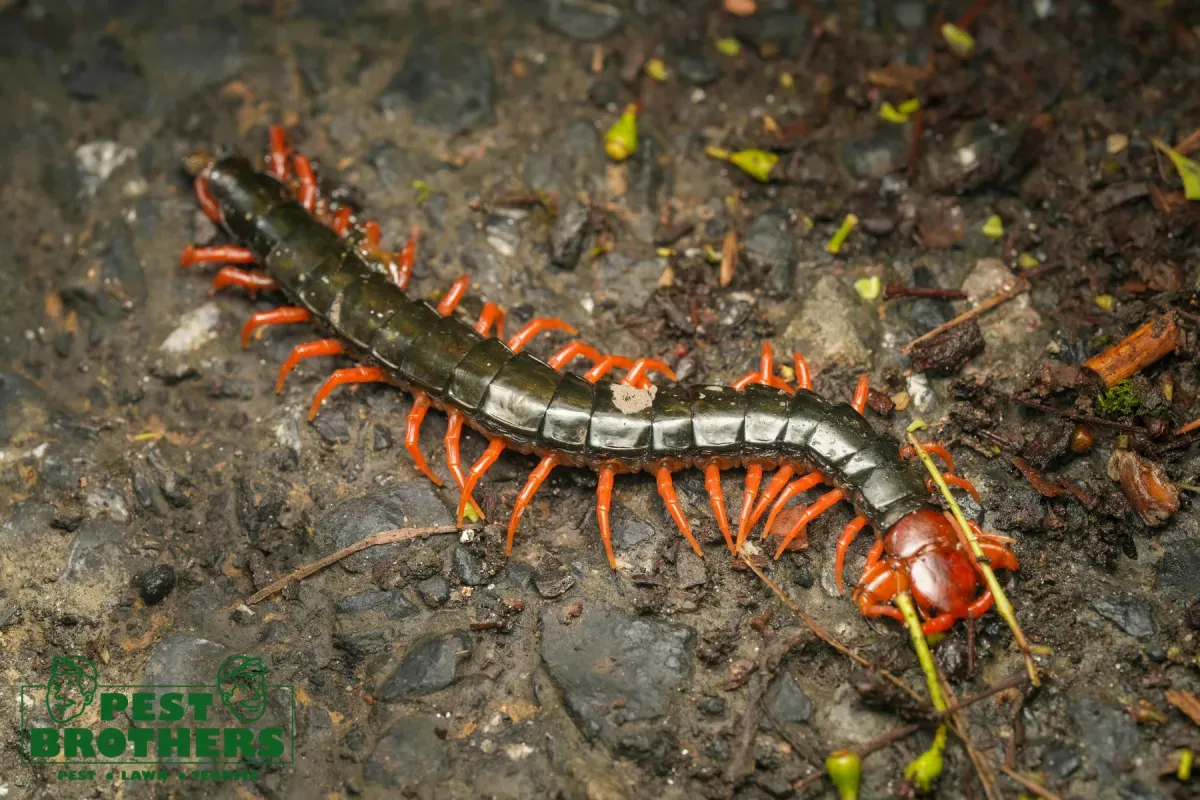
Professional centipede pest control differs from DIY methods mainly in the depth of inspection, pest identification, treatment strategy, and follow-up. DIY methods can help with limited activity and basic prevention, while professional service can identify moisture, entry points, shelter, and other conditions that may be allowing centipedes to keep appearing.
What Is the Difference Between Professional and DIY Centipede Pest Control?
DIY centipede control usually starts with steps homeowners can take themselves, such as reducing moisture, removing clutter, sealing gaps, and keeping areas around the home clean. These measures can be useful when activity is limited, and the cause is easy to identify.
Professional pest control takes a broader approach. A technician can inspect the property for conditions that may support recurring activity, including damp areas, possible entry points, shelter, and the presence of other insects that centipedes may feed on.
| Factor | DIY Methods | Professional Pest Control |
| Pest identification | Homeowner assessment | Professional evaluation |
| Property inspection | Usually limited to visible areas | Broader inspection when appropriate |
| Moisture assessment | Basic checks | Assessment of contributing conditions |
| Entry points | Obvious gaps | Potential access points identified during inspection |
| Treatment | Homeowner-selected method | Approach based on findings |
| Prevention | Homeowner-maintained | Treatment plus prevention guidance |
| Follow-up | Self-monitoring | Follow-up when appropriate |
| Best suited for | Limited activity | Recurring or difficult-to-trace activity |
The main difference is not simply who applies the treatment. Professional service focuses on understanding the conditions behind the pest activity and choosing an approach based on what is found.
What Can Homeowners Do to Control Centipedes Themselves?
Basic prevention is a practical first step when centipede activity is limited. The goal is to make the property less favorable to centipedes while reducing places where they can enter or hide.
Reduce Moisture
Centipedes are commonly associated with damp areas. Check for leaking pipes, standing water, poor drainage, condensation, and areas that stay unusually humid.
Pay attention to bathrooms, kitchens, basements, crawl spaces, garages, and areas around plumbing. Fixing the source of moisture can be more useful than repeatedly removing the pests that appear nearby.
Remove Hiding Places
Cardboard, piles of leaves, wood, organic debris, and unused materials can create shelter for pests.
Keep storage areas organized and avoid allowing unnecessary materials to build up against the home, especially in damp areas.
Seal Potential Entry Points
Inspect doors, windows, screens, foundation areas, and openings around pipes or utility lines.
Repairing damaged screens, replacing worn weatherstripping, and sealing appropriate openings can reduce potential routes into the home.
Reduce Other Insects
Centipedes are predators that feed on smaller pests such as spiders, termites, and other insects. A noticeable increase in centipedes can sometimes point to another pest population nearby.
For that reason, homeowners should consider the conditions around the entire property rather than focusing only on the centipedes they see.
What Are the Limitations of DIY Centipede Pest Control?
DIY prevention can work for simple conditions, but it has limits when the source of the activity is unclear.
You May Only Be Removing Visible Activity
Seeing fewer centipedes does not necessarily mean the conditions supporting them have changed. If moisture, shelter, or entry points remain, new activity can continue.
Hidden Entry Points Can Be Difficult to Find
A homeowner may find a centipede near a bathroom or garage without knowing how it entered the property. The actual access point may be outside or in an area that is rarely inspected.
Moisture Problems May Continue
A damp crawl space, plumbing leak, or drainage issue can continue to create favorable conditions even after visible pests are removed.
The Pest May Be Misidentified
Correct identification matters because different pests have different behaviors and control needs. Centipedes, for example, are fast-moving predators, while millipedes are slower and feed primarily on decaying plant material.
When DIY Methods May Not Be Enough
Consider professional evaluation when:
- Centipedes continue appearing despite reasonable prevention.
- Activity occurs in several areas.
- You cannot determine where they are entering.
- Moisture problems remain unresolved.
- Other insects are also becoming more common.
- Previous DIY attempts have only provided temporary relief.
What Does Professional Centipede Pest Control Include?
Professional centipede control generally begins with understanding the property rather than immediately treating every visible pest.
Property Inspection
A technician may inspect areas where centipedes are commonly found and look for conditions that could support activity, including damp areas, entry points, cracks, clutter, exterior debris, vegetation, and drainage concerns.
Pest Identification
Correct identification helps determine the appropriate response. It also prevents homeowners from treating one type of pest based on assumptions about another.
Condition Assessment
A professional can look at why centipedes may be using the property. This can include moisture, shelter, entry routes, and the presence of other insects.
For homeowners researching an exterminator in Weston, FL, this type of evaluation is an important part of understanding what professional service can provide beyond removing visible pests.
Targeted Treatment
Treatment should be based on the pest, the property, the location of activity, and the conditions found during inspection.
A professional approach does not necessarily mean treating every area in the same way. Targeted treatment allows attention to be focused where it is needed.
Prevention and Follow-Up
Depending on the situation, professional service may also include recommendations for reducing moisture, limiting access, removing harborage, or monitoring continued activity.
What Factors Determine Which Centipede Control Method Is Used?
Professional treatment decisions can depend on several property and pest factors.
Pest Activity: How often centipedes are seen and where they are appearing.
Moisture: Leaks, damp areas, standing water, humidity, and drainage concerns that may support activity.
Entry Points: Gaps around doors, windows, foundations, utility openings, or other areas that may provide access.
Harborage: Clutter, debris, vegetation, wood, mulch, or other protected areas where pests can shelter.
Food Sources: Other insects and environmental conditions that may support centipede activity.
Property Conditions: Interior and exterior conditions that can make the property easier for pests to enter or use.
Treatment History: Previous attempts to control the problem and whether activity returned afterward.
Looking at these factors together gives technicians a clearer picture of what may be contributing to the problem.
How Is Professional Pest Control Different From Killing Visible Centipedes?
There is a difference between removing a visible pest and addressing the conditions that may support recurring activity.
| Approach | Main Focus | Addresses Conditions? | Prevention Guidance |
| Removing visible centipedes | Immediate activity | Usually limited | Limited |
| DIY prevention | Entry and environmental conditions | Sometimes | Yes |
| Professional inspection | Finding contributing conditions | Yes | Yes |
| Professional treatment | Managing identified activity | Based on findings | Often included |
For example, a homeowner may remove several centipedes from a damp room. If the moisture problem remains, the conditions that supported the activity have not changed.
This distinction matters when considering pest control in Weston, FL, because recurring activity may require attention to the property conditions behind the problem rather than repeated removal of individual pests.
Common Centipede Pest Control Myth: Killing Every Centipede Solves the Problem
Myth: If you kill every centipede you see, the problem is solved.
Reality: Removing visible centipedes does not necessarily address moisture, shelter, entry points, or other insects that may be supporting continued activity.
Centipedes are often found in damp areas, and an increase in their numbers can indicate the presence of other insects they prey on.
The better approach is to consider both the pest and the conditions that allow it to use the property.
Applying Our Family-Owned, Eco-Friendly Approach to Solve This
At Pest Brothers, Inc. – Pest, Lawn, & Termite Control, our approach combines family-owned service, environmentally friendly methods, honest communication, free estimates, and effective pest management.
Family-Owned
Our family-owned values shape how we work with customers. We aim to provide a friendly, approachable experience while maintaining professional standards.
Customers should be able to ask questions, understand the recommendations, and know what to expect from their service.
Eco-Friendly
We use environmentally friendly and safe pesticides appropriately and incorporate Integrated Pest Management (IPM) techniques into our pest-control approach. Our centipede service information also emphasizes eco-friendly, effective methods and customized solutions.
This means treatment is considered alongside property conditions and prevention rather than treating every situation exactly the same way.
Honest and Credible
We believe customers deserve clear information about their pest concerns. Our technicians can explain what they find, what may be contributing to activity, and why a particular treatment or prevention step may be recommended.
That makes the process easier to understand and helps customers make informed decisions about their property.
100% Free Estimates
Our website identifies 100% Free Estimates as one of the features that makes Pest Brothers unique.
A free estimate gives homeowners an opportunity to discuss the problem and learn more about possible service before moving forward.
Eco-Friendly, Effective Methods
Our goal is to control pest activity while considering the property and the people who use it. We combine environmentally friendly and safe pesticides with IPM practices and recommendations that address conditions such as moisture, entry points, and shelter.
During a pest assessment in Weston, for example, looking beyond the visible centipedes can help identify property conditions that may be contributing to repeated activity.
How Can Homeowners Prevent Centipedes From Coming Back?
Professional service and homeowner maintenance work together. The Pest Brothers’ centipede guidance recommends measures such as sealing gaps, controlling moisture, removing debris, regular cleaning, proper ventilation, and regular inspections.
- Fix leaks and moisture problems.
- Improve ventilation in damp areas.
- Seal appropriate gaps around doors and windows.
- Repair damaged screens.
- Remove leaves and organic debris near the structure.
- Keep storage areas organized.
- Reduce unnecessary cardboard and clutter.
- Address standing water where possible.
- Maintain drainage around the property.
- Watch for recurring pest activity.
These steps can reduce some of the conditions that make a property more attractive to centipedes, although they cannot guarantee that pests will never appear.
When Should You Hire a Professional?
Professional help may be appropriate when the problem is persistent, increasing, or difficult to understand.
Consider requesting an inspection if:
- Centipedes keep appearing.
- Activity is occurring in multiple areas.
- You cannot identify the source.
- Moisture problems are difficult to correct.
- Other insects are also present.
- DIY methods have not provided lasting results.
- You are unsure which pest you are dealing with.
- You want professional guidance on preventing recurring activity.
If you are comparing Weston pest control options, ask whether the company will explain the conditions contributing to the problem and what you can do to reduce future activity.
People Also Ask
Is professional centipede pest control better than DIY?
The right approach depends on the level of activity, property conditions, and whether the source can be identified and corrected. DIY prevention may be reasonable for limited activity, while recurring or difficult-to-trace problems may benefit from professional evaluation.
What is the best way to get rid of centipedes naturally?
Start by reducing moisture, removing clutter and outdoor debris, sealing appropriate entry points, and addressing conditions that may attract other insects. These steps can make the property less favorable to centipedes.
Why do I keep finding centipedes in my house?
Recurring centipedes may be associated with moisture, shelter, entry points, or the presence of other insects they feed on. Finding the conditions behind the activity can be more useful than simply removing individual pests.
How do professionals get rid of centipedes?
Professional service can involve inspecting the property, identifying the pest, looking for moisture and entry points, applying an appropriate targeted treatment, and recommending prevention steps based on the conditions found.
How long does professional centipede pest control take to work?
The timeline depends on the level of activity, property conditions, treatment approach, and whether contributing conditions are corrected. Some activity may decrease quickly, while recurring problems may require monitoring or follow-up.
Can centipedes come back after professional treatment?
Yes. Centipedes may return if favorable moisture, shelter, food sources, or entry points remain. Continued activity should be evaluated so the contributing conditions can be addressed.
Choose the Right Approach for Centipede Control
DIY prevention can be a useful first step when centipede activity is limited, and the cause is easy to identify. Reducing moisture, removing clutter, maintaining the exterior, and sealing appropriate entry points can all help.
Professional pest control adds inspection, pest identification, targeted treatment, and guidance for recurring or difficult-to-trace activity. The goal is not simply to remove the centipedes you can see but to understand the conditions that may be contributing to the problem.
At Pest Brothers, Inc. – Pest, Lawn, & Termite Control, we combine family-owned values, honest and credible service, environmentally friendly and safe pesticides, IPM techniques, and effective methods tailored to each customer’s needs.
If you’re dealing with recurring centipede activity or want professional guidance, contact us for a consultation or 100% free estimate. Our team can assess your concerns and help determine a practical approach for your property.